
Ascot Racecourse
Introduction
Ascot in Berkshire is one of the leading racecourses in the country, playing host to nine of the thirty one Group 1 races in the UK. It is owned by the Crown Estate and, being only a few miles from Windsor, has great ties with the Royal family. It plays host to twenty five fixtures each year, both flat and National Hunt, with the Royal meeting being a highlight of the racing and social calendar, held over five days in June.
The flat course is a right handed triangle, one mile six furlongs in length with a two and a half furlong run-in. The jumps course is right handed with stiff fences and is one mile five furlongs in length.
History
Ascot racecourse was founded by Queen Anne in 1711, with the first ever race, Her Majesty’s Plate, being held in August of that year. Just over a century later, in 1813, an Act of Parliament ensured that the course would always remain open to the public.
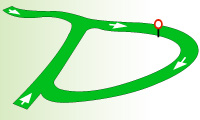
Ascot Racecourse
Another century later, in 1913, the Ascot Authority was created to manage the course and they do so to this day. Up until 1945 the only racing was the four day Royal meeting but, gradually, further fixtures have been introduced, most notably the Steeplechase and hurdles in 1965.
In September 2004 Ascot was closed for almost two years, whilst it underwent a £185 million facelift. It was eventually re-opened in June 2006 by the Queen. The new grandstand has been the subject of controversy, with critics saying that too much space has been given over to corporate hospitality areas and expensive dining facilities, and not enough to good viewing for the everyday patrons. This was capped off by further controversy in 2007 when Royal Enclosure day passes were included in hospitality packages.
Royal Ascot
Royal Ascot is a major highlight of the racing and social calendar, with sixteen Group races over the five days, with at least one Group One race each day. Over 300,000 people attend over the course of the Festival, many of whom are more interested in the social occasion than the racing, much to the irritation of many racing fans.
It is well represented by members of the Royal family, who arrive each day in a horse drawn carriage. The media interest in who is wearing what often seems to exceed coverage of the racing itself.
Prize money for 2008 amounts to four million pounds, with the highlight of the five days being the Thursday meeting (Ladies’ Day), when the Gold Cup is run. This race started in 1807 and history was made in 1970 when Rosemary Lomax was the first woman trainer ever to win the race.
The Queen traditionally presents this trophy which, along with the Royal Hunt Cup and the Queen’s Vase, is kept by the winner. The cups for the other twenty seven races, many of which are antiques, have to be handed back each year.
The Queen owns and breeds racehorses, as well as being an accomplished horsewoman. Her horses have enjoyed success at Ascot over the years and her jockeys are proud to wear the royal colours of purple trimmed with gold braid, scarlet sleeves, black velvet cap and gold fringe.
Fixtures and Tickets
For a full fixture list, see the appropriate page of the official website.
Tickets
Tickets can be booked online.
There is a great variation in ticket prices, depending on which fixture you wish to attend, where you wish to view from and which hospitality package you wish to purchase (if any).
General admission for some fixtures is under £10 if booked online, rising to £63 for the Thursday of Royal Ascot when the Gold Cup is run.
Under 16s are admitted free of charge, although proof of age may be requested.
Dress Code
Men
Men must wear black or grey morning dress, including waistcoat and top hat or service dress. Overseas visitors are permitted to wear the service dress or formal national dress of their country.
Women
Women must wear formal day dress or trouser suit of matching material, with a hat to cover the crown of the head. Shoulders must be covered.
There are very specific rules governing the style of ladies’ dresses, so please see here for full information.
Non-Royal meetings
Smart dress is required, with shirt and tie for men.
Premier enclosure
Jeans, shorts, t-shirts, football and rugby tops, sweatshirts and trainers are all banned.
Eating and Drinking
Afternoon tea with strawberries and cream, washed down by a glass of pink champagne, the Pimms and champagne reception with canapés, gastronomic five course meals… all of this sums up the gracious hospitality available at Ascot.
However, if your budget does not stretch to this sort of outlay, rest assured that you will not go hungry. Two or three course meals are available at the Horsewalk Restaurant, the Ascot Grill and the Arundel Restaurant.
The new Ragusa Grill gives racegoers at Royal Ascot the chance to sample freshly barbecued dishes with salads and new potatoes, followed by strawberries and cream. Alternatively, give the Taste of Asia outlet a try or, if you prefer pasta and pizza, visit Pranzo. Burgers and other grilled meats are on sale at the Front Runner Grill and the Gold Cup Grill, and sandwiches and salads can be purchased at the various delis at the racecourse.
For full details of Ascot Hospitality, see the appropriate page of the official website.
Getting there
By Road
The racecourse is to the west of the town of Ascot on the A329 and is easily accessed from the M3 (junction 3) or M4 (junction 6).
By Rail
There is a good train service from Reading, Guildford and London Waterloo. Ascot station is a seven minute walk from the racecourse.
By Air
The closest airport is London Heathrow, some 10 miles from the course.
Contacts
Address
- Ascot Racecourse
- Ascot
- Berkshire
- SL5 7JX
- Tel: 01344 876 876
- Fax: 01344 628 299
- Email: General Enquiries